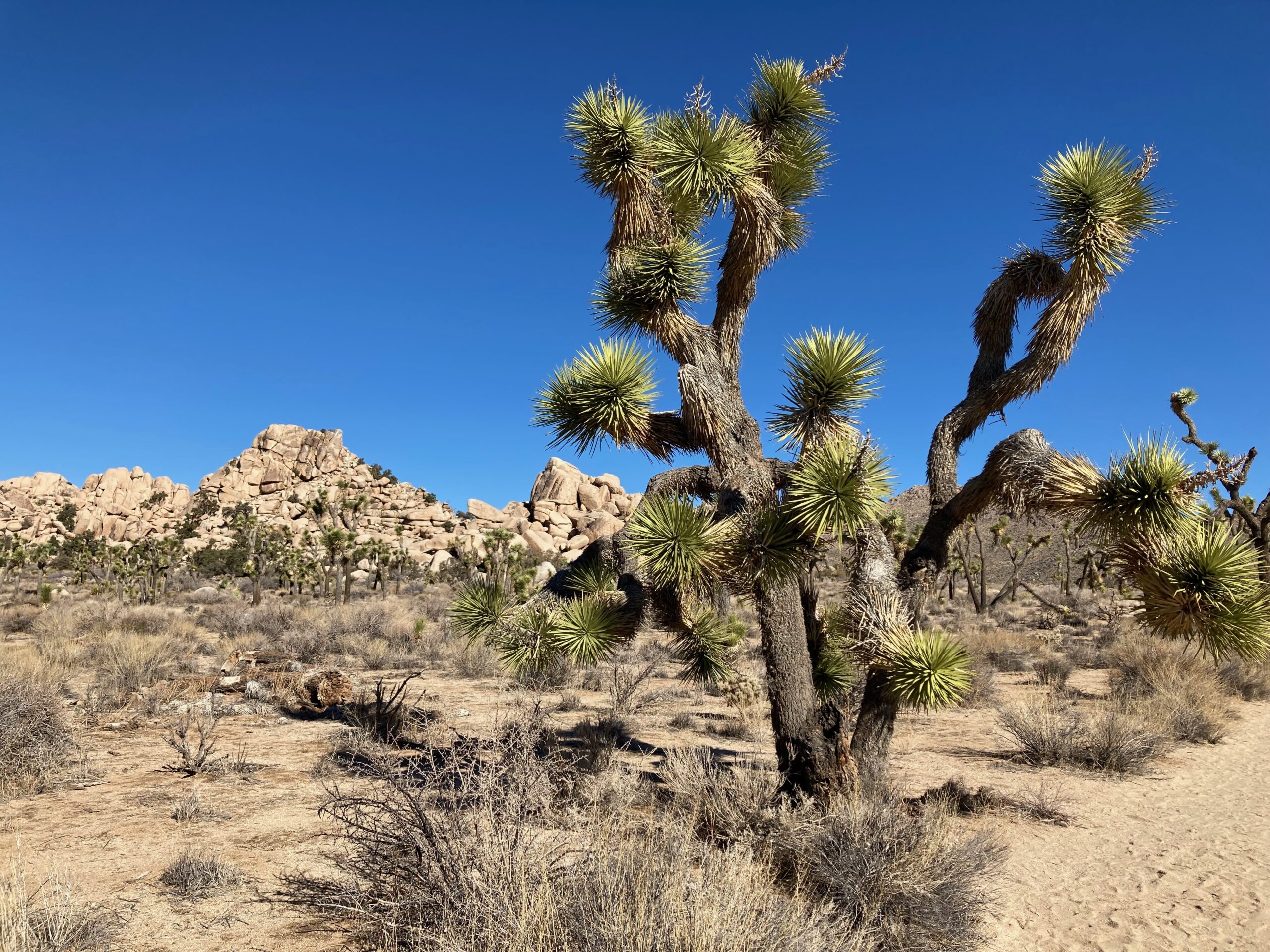
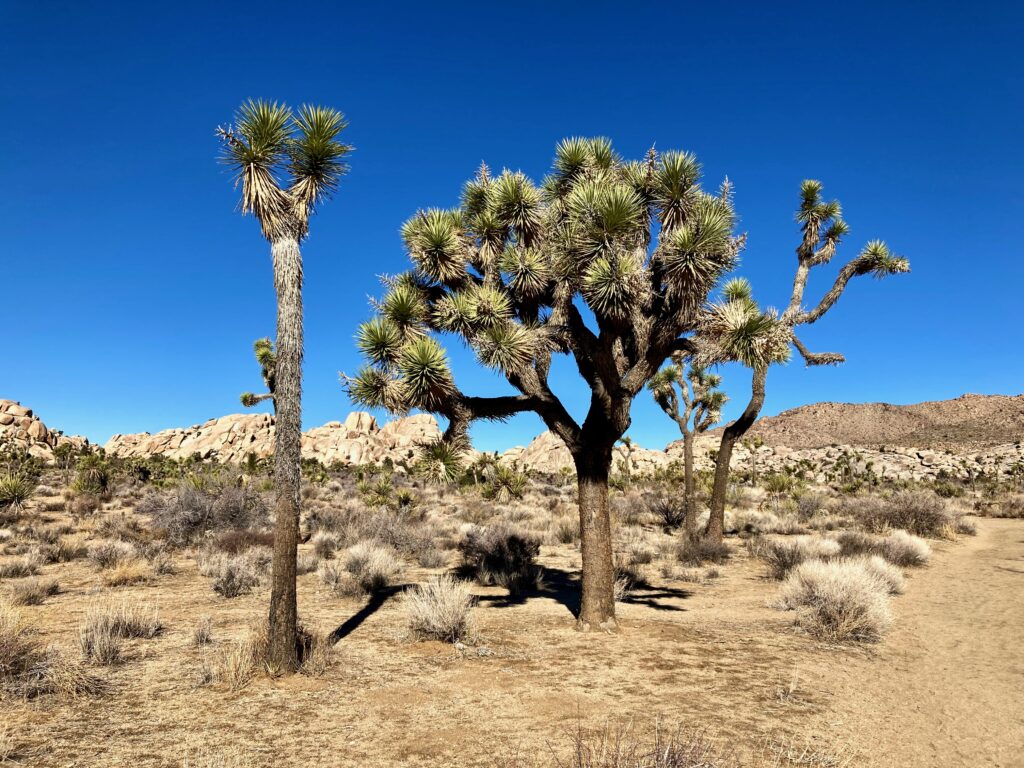
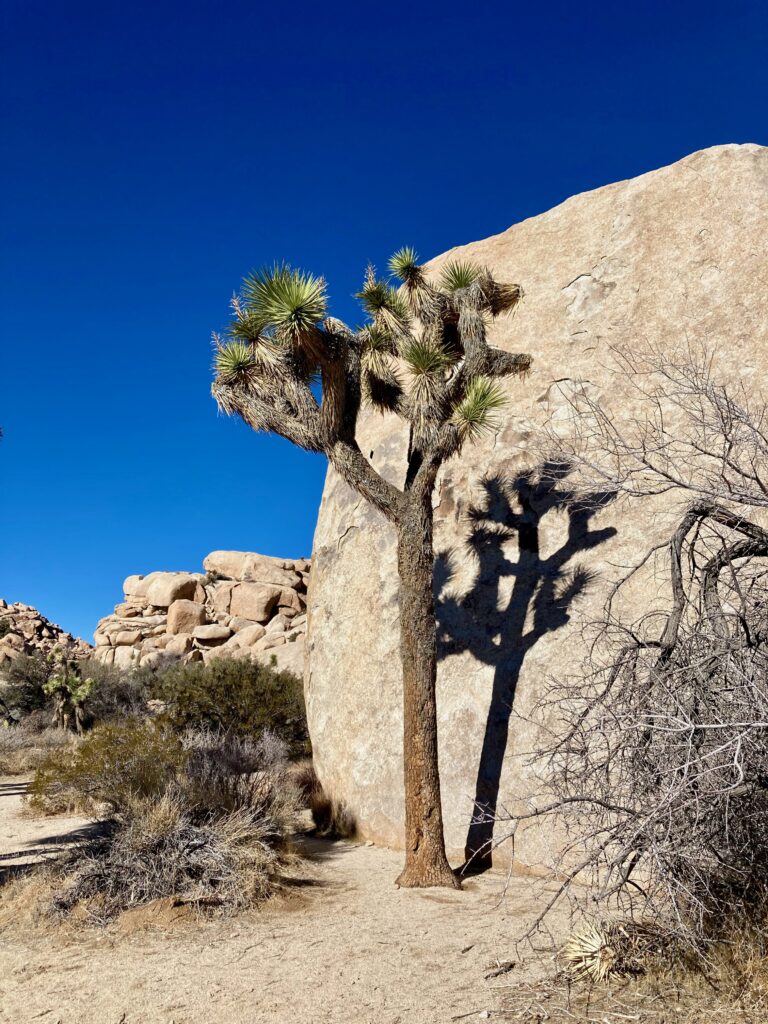
I think that I shall never see a more improbable charismatic megaflora than Yucca breviflora, affectionately known as the Joshua Tree.
Joshua isn’t technically a tree, and belongs to the same family as yucca and agave. They are found only in the Mojave desert, and only a in a narrow band of elevations from 2000 to 6000 feet. These beauties are in the northern part of the national park that bears their name, but the densest grove I saw was outside the park, in the Mojave National Preserve.
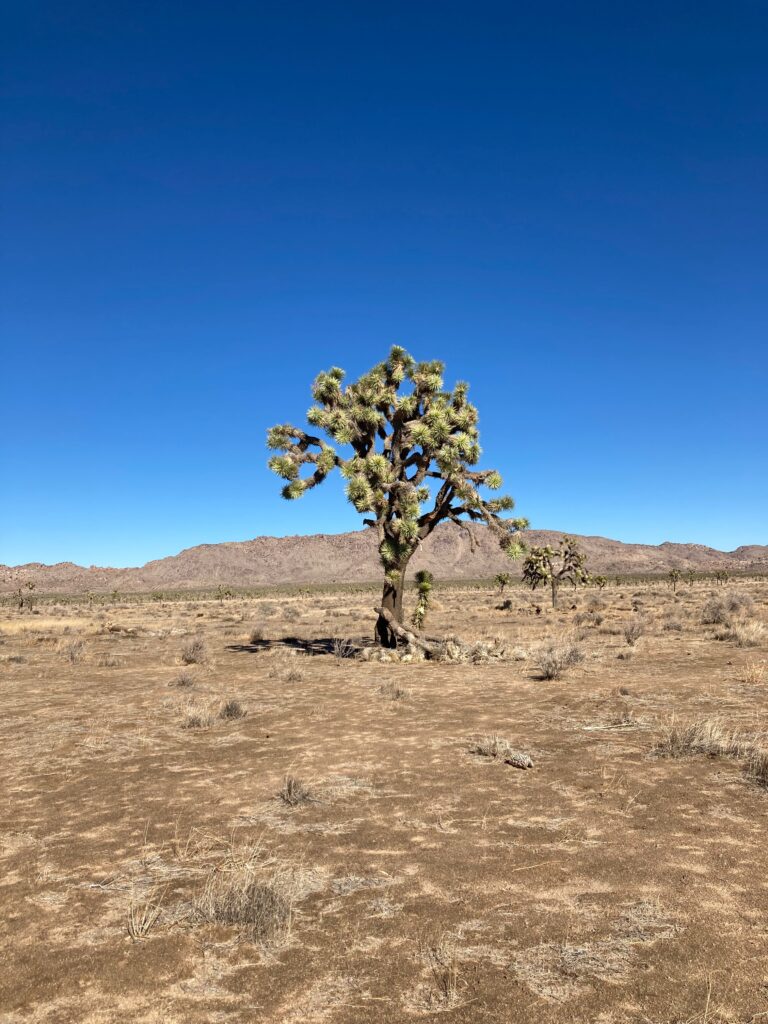
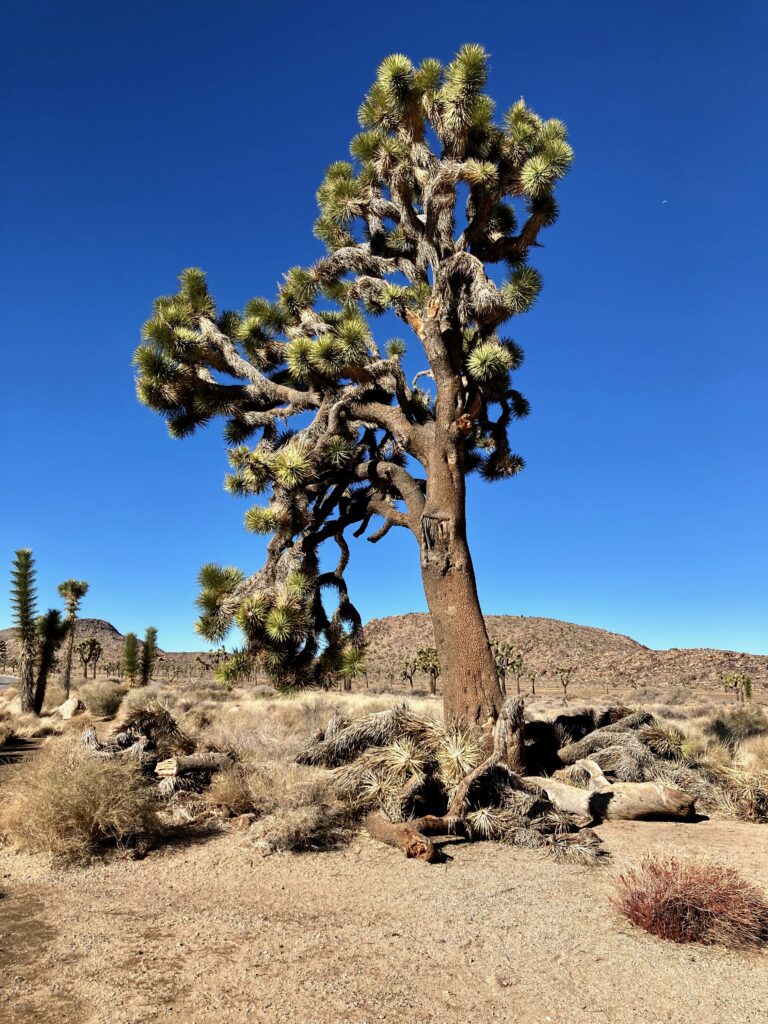
Joshua trees require specific temperature and moisture conditions to flower and for their seeds to germinate. Like many other species that occupy a narrow niche, climate change poses a severe threat. By some accounts, when the Giant Shasta Ground Sloth died out at the end of the last ice age, the Joshua Tree lost its most effective partner in dispersing seeds. The weight of scientific evidence may not support that theory, though I do love the image of a giant sloth balancing on its hind legs and tail to eat fruit from the branches, bringing together two oddities which may (alas) both be evolutionary dead ends.